
Table of Contents
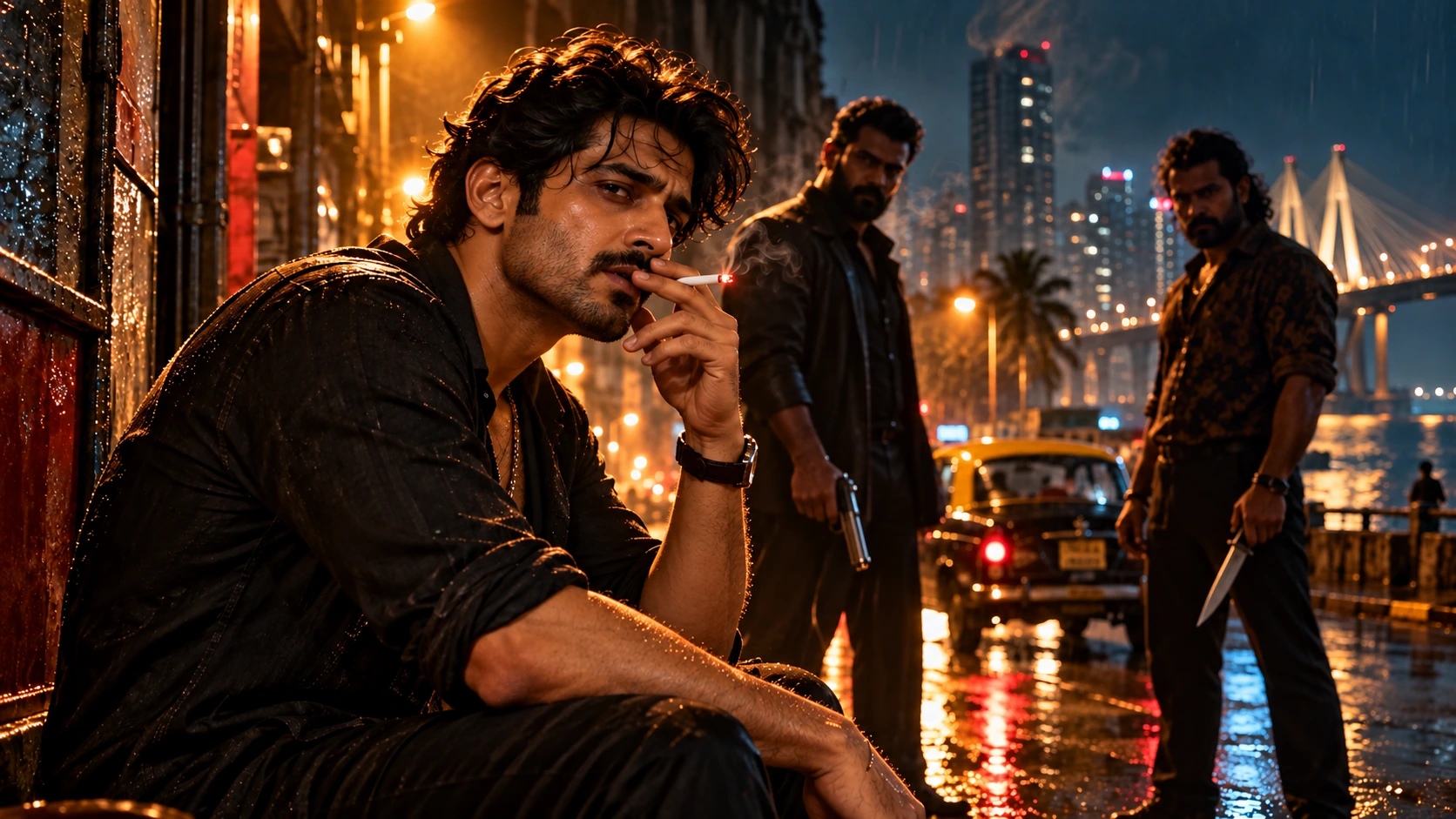
The trend of featuring cigarettes on movie posters has also grown. There is a significant difference between showing a character smoking within the narrative and depicting them with a cigarette on the poster. While a cigarette might be essential to the story itself, every element in a poster is chosen deliberately. A poster needs to spark a question in the viewer’s mind within just a few seconds: Who exactly is this person? What are they like? How dark is their character?
When Vicky Kaushal’s look was revealed in the new poster for Sanjay Leela Bhansali’s Love & War, the cigarette held between his lips drew more attention than his face or attire. With a lighter in hand, a cigarette between his lips, and a direct, intense gaze fixed on the camera, the poster’s overall visual presents him as simultaneously rugged and enigmatic. Interestingly, similar imagery has previously appeared in Ranbir Kapoor’s Animal and Ranveer Singh’s Dhurandhar. The characters and films differ, yet the visual language remains strikingly similar.
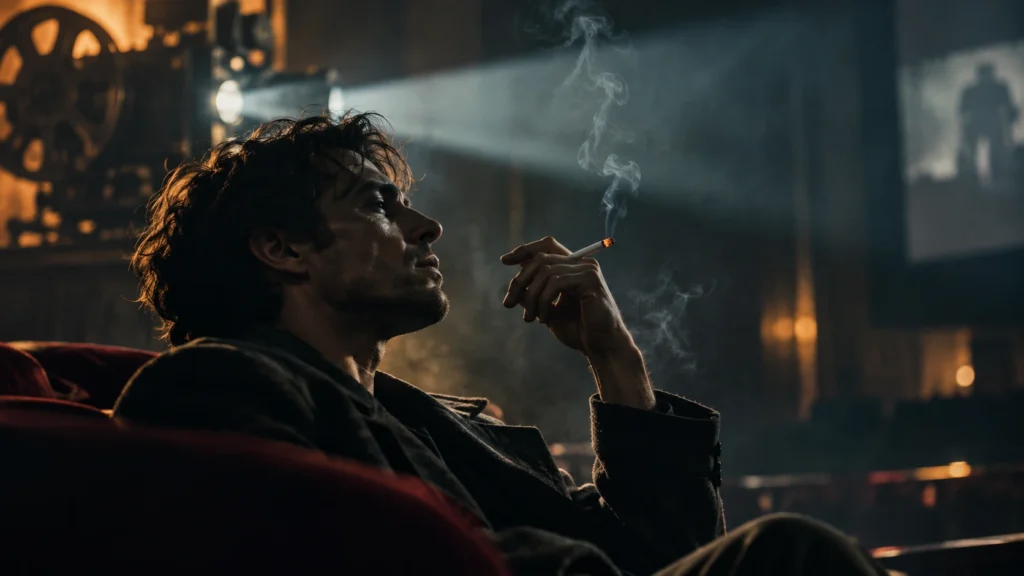
The use of cigarettes in Hindi cinema is not a new trend; it is a cinematic language that has persisted for generations, with its connotations evolving over time. At times, the cigarette has symbolized a male character’s virility; at others, it has represented rebellion, loneliness, or stress. Even in the absence of dialogue, a close-up shot of a character—framed amidst the smoke with a lit cigarette in hand—has often sufficed to convey that this is no ordinary man. This is particularly evident with the ‘anti-hero’ archetype: a figure who defies rules, disregards societal norms, and lives life on his own terms. In such instances, the cigarette becomes a visual language for his personality.
Behind the Smoke: The Psychology of Cigarettes in Cinema
In the early days of Hindi cinema, the relationship between the hero and the cigarette was not quite so straightforward. For a long time, smoking on screen was portrayed as a character flaw, a sign of a negative persona, or an identifier of a specific social class. However, as the archetype of the Hindi film hero evolved, so did his relationship with the cigarette.
The hero was no longer merely a virtuous, large-hearted figure or a family man fighting for his kin; he could also be prone to anger, break rules, and clash with the system. The cigarette became a highly effective cinematic tool for such a character, as it could convey—without a single word of dialogue—just how broken or enraged the man was on the inside.
When the ‘Angry Young Man’ archetype emerged in Hindi cinema during the 1970s, the entire construct of the hero’s masculinity underwent a transformation. In many of Amitabh Bachchan’s roles, elements such as cigarettes, alcohol, and solitude mirrored the restlessness and rebelliousness of the men of that era. The character of Vijay in the film Deewaar serves as a prime example of this; here, the cigarette accompanies the man through the various stages of his life—his social ascent and his evolving personality. Cigarettes also served as markers of status: the beedi for the poor man, the cigarette for the middle-class or urban man, and the cigar for the powerful man. Cinema utilised these as symbols of social identity.
The Cigarette Effect: How Movies Turn Smoking Into an Attitude
Then comes a phase when the cigarette becomes the language of pain. Take the character of Devdas, for instance; his anguish and guilt were portrayed through cigarettes and alcohol. When Shah Rukh Khan—playing Devdas—smokes, he isn’t merely blowing smoke; he is revealing his inner brokenness on screen.
In such a context, the very same object can convey vastly different meanings across different characters. In Devdas, that same cigarette might symbolize self-destruction and the pain of separation; in a gangster film, it could signal danger and power; whereas in a romantic movie, it might make the hero appear mysterious and cool.
And this is where the cigarette becomes linked to masculinity. For a long time, Hindi cinema relied on specific elements to portray male characters as strong: a glass of liquor, a deep voice, a fast car, weapons, a suit, and a cigar or cigarette. Among these, the cigarette was the easiest option.
Perhaps this is why the trend of featuring cigarettes on posters has grown. There is a significant difference between showing a character smoking within the narrative and depicting them with a cigarette on the poster. While a cigarette might be essential to the story within the film, every element on a poster is chosen deliberately. A poster must spark a question in the viewer’s mind within mere seconds: Who exactly is this person? What are they like? How dark is their nature? The cigarette becomes an easy way to answer all these questions within a single frame.
This is why the association between cigarettes and a ‘cool’ image is evident not only within the films themselves but also in their promotional material. A film poster cannot narrate a two-minute story; it must convey a character’s mood, style, and temperament within a single frame. In this context, a cigarette held in hand becomes a convenient cinematic symbol. A cigarette can lend an air of mystery to a hero in a suit, while making a blood-stained villain appear even more menacing. Essentially, the cigarette serves as a visual code here.
Animal offers an interesting example of this. The entire world of Ranbir Kapoor’s character, Ranvijay, is woven around aggression, violence, power, and masculinity. For such a character, the cigarette in his hand is less a mere habit and more a part of the packaging of his persona. Ranveer Singh’s cigarette-toting look in Dhurandhar appears to employ a similar visual language.
Why Do Filmmakers Give Their Most Intense Characters a Cigarette?
Cinema has another side as well. Often, smoking serves as a way to depict a character’s weakness, stress, or the darker aspects of their personality. The problem arises when the scene’s entire visual presentation—combining the hero’s face, body language, and background music—transforms the act of smoking into something attractive.
A character smoking a cigarette within a story is one thing, but marketing that same image as a “cool look” for the star is quite another. This is where the smoking hero emerges as a distinct Bollywood pattern. In Hindi cinema, it is no longer enough for the hero to simply appear “good”; he must also exude attitude—and the cigarette has long been a part of the visual language of that attitude.
The story of the cigarette in Bollywood is fascinating because it holds no single, fixed meaning. At times, the cigarette defined the villain; at others, it embodied the restlessness of the ‘Angry Young Man,’ the anguish of Devdas, or the authority of a gangster; and now, it often reflects the attitude of the anti-hero. As characters evolved over time, the cigarette kept finding new meaning alongside them.
Also Read | ‘Sanson Ki Mala’ echoes in ‘Mirzapur’! What is the story behind this Qawwali

I am Ankit Mishra from Sitapur, Uttar Pradesh, the founder and content writer of this website. I primarily work in the entertainment and sports niche, where I publish detailed and original content related to Bollywood, Hollywood, Cricket, WWE and Celebrities Wiki. I believe in providing clear, honest information. All content on this platform is written by me with a focus on quality, reliability, and real user needs. I am an SEO Analyst, and I have worked for many agencies in Lucknow. Also, I love to capture photos.