
Table of Contents
Rear Window is not merely a murder mystery; it is a movie about the human tendency to secretly peer into the private lives of others. Jeff has no compelling reason to watch his neighbours. Initially, he does so simply to stave off boredom, but the more he observes, the more he feels he is beginning to understand these people.
When filmmaker Alfred Hitchcock’s Rear Window was released in 1954, cameras were not in everyone’s hands as they are today; social media did not exist, and peering into someone else’s life was not nearly as easy. Yet, nearly seven decades ago, Hitchcock captured that very human curiosity—that restless urge to know what is happening in others’ lives—which is visible everywhere today, from social media, CCTV, and reality shows to neighbourhood windows and phone screens.
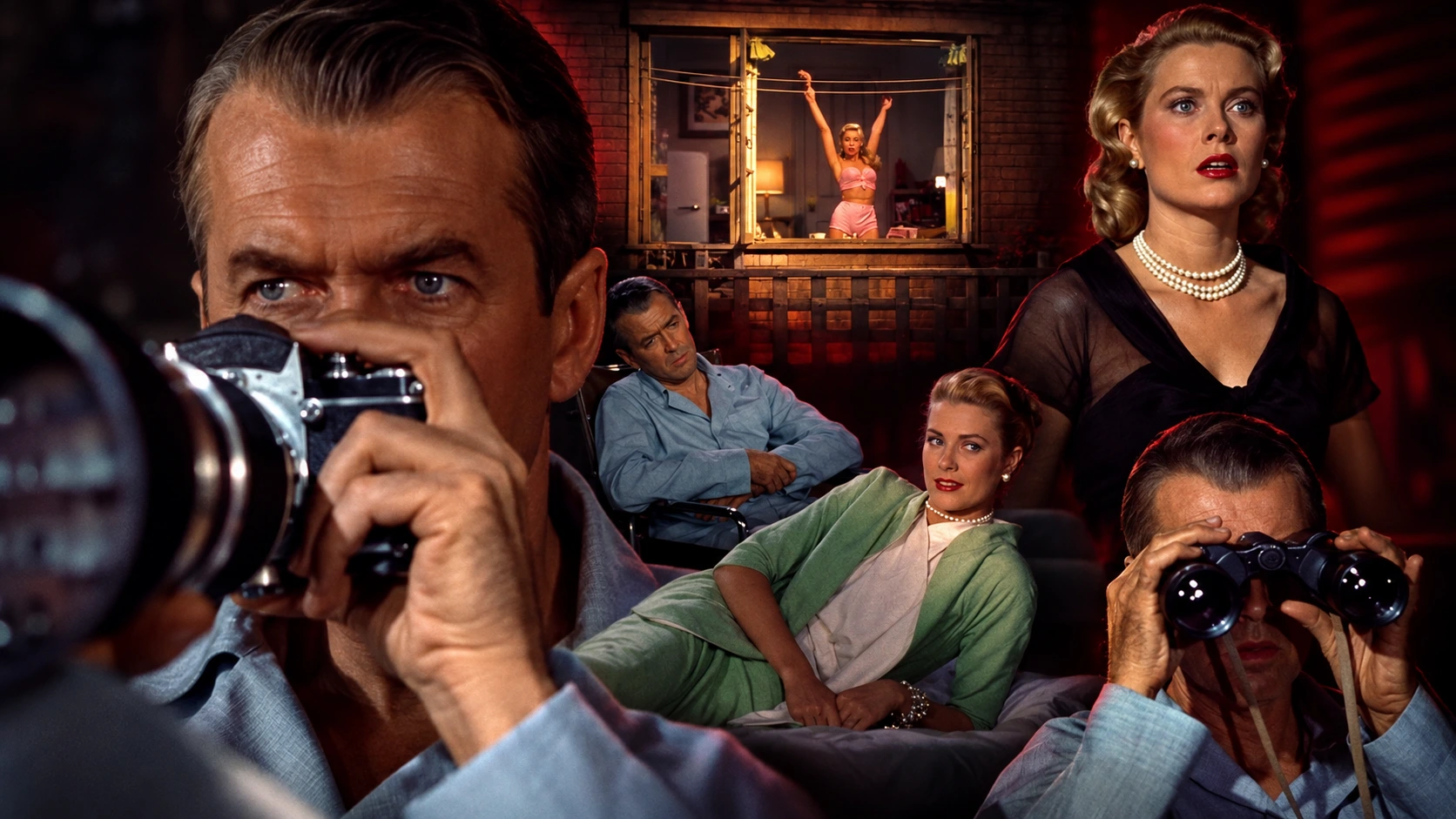
In the movie, James Stewart’s character, Jeff Jefferies, is a photographer confined to his apartment in a wheelchair due to a broken leg. With no way to go out and little to do, he overlooks a large courtyard flanked by other apartments. Gradually, Jeff begins to observe the lives of the people living behind those windows—some are lonely, others are in love or composing music; some are in the early days of marriage, while others are grappling with the bitterness of strained relationships.
But then, one night, Jeff notices something in the behaviour of his neighbour, Lars Thorwald, that makes him suspect he might have murdered his wife. The question is no longer just about what Jeff saw; it becomes a matter of whether what we see is the truth.
This is where Hitchcock makes his masterstroke. Jeff’s eyes become the audience’s eyes. The camera mostly shows only what Jeff can see from his room; in other words, we, too, are denied permission to enter Thorwald’s home and discover the truth. We are just as helpless as Jeff. He sits in his wheelchair, peering through binoculars at the window across the way, while we remain fixed on that same window on the screen.
In this manner, Hitchcock virtually eliminates the distance between the viewer and the character. We are not merely watching Jeff spy on his neighbours’ lives; we are spying right along with him. This is the most intriguing aspect of Rear Window: the movie implicates us in the very activity it questions.
This also means that Rear Window is not merely a murder mystery; it is a movie about the human tendency to secretly peer into the private lives of others. Jeff has no compelling reason to watch his neighbours. Initially, he does so simply to stave off boredom, but the more he observes, the more he feels he is beginning to understand these people. It is this very illusion that Hitchcock finds fascinating—how we construct a complete story about a person based on mere glimpses of their life.
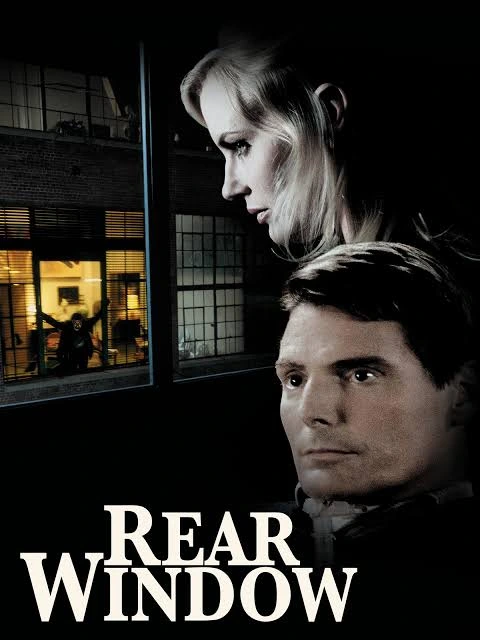
No One Sees What Alfred Hitchcock Saw Through a Rear Window
The movie’s most significant gambit lies in how Hitchcock implicates the audience as well. We know Jeff is spying on his neighbours without their consent, yet we share his curiosity. When something suspicious appears in a window, we, too, want him to look closer. When the situation seems mundane for a moment, we grow restless, hoping it might turn out to be a murder case—meaning the audience itself indulges in the very voyeurism the movie questions. For this reason, critics have interpreted the movie as a commentary on the relationship between cinema and the spectator.
In this movie, Hitchcock transformed a single location into an entire world. Almost the entire movie unfolds within Jeff’s apartment and the vast courtyard set facing it. If you look closely at this courtyard, it is a microcosm in itself. A different story plays out behind every window—budding romance, loneliness, marriage, quarrels, struggles, and even relationships where love has long since faded.
Jeff observes all this from the outside, and without realizing it, begins to view his own relationship through the lens of these stories. This is why Grace Kelly’s character, Lisa Fremont, is not merely a romantic figure. Jeff is hesitant about marriage because he fears a committed relationship will curtail his independent lifestyle. As he watches various types of relationships unfold in the windows across the way, Lisa gradually proves that she is not just a beautiful, impeccably dressed girlfriend, but also a courageous woman willing to face danger to uncover the truth.
The Rear Window and Romance
This is where the movie’s romance and murder mystery intertwine. Jeff is watching from the window, but Lisa takes the risk of going inside; in other words, the man who saw himself merely as an observer is ultimately compelled to take action. It is easy to watch others’ lives from a distance, but what happens when that very danger reaches one’s own life? Hitchcock creates suspense through this very shift.
Jeff’s broken leg and wheelchair are not merely plot devices; they dictate the entire cinematic experience. He can see but cannot easily move about; thus, his eyes are simultaneously his greatest strength and his greatest weakness. Then comes perhaps the movie’s most brilliant moment—when the observer himself becomes the observed. Throughout the movie, it is Jeff who has been watching Thorwald.
Thorwald likely has no inkling that his actions are being monitored, yet there comes a moment when he senses Jeff’s presence and looks directly at him. In that instant, the power dynamic shifts completely: the man who had been watching others suddenly finds himself under scrutiny. This is the moment Hitchcock startles the audience as well, for we, too, had been watching just as Jeff was.
Also Read | 15 Best Horror Movies You Must Watch Before You Die
I am Ankit Mishra from Sitapur, Uttar Pradesh, the founder and content writer of this website. I primarily work in the entertainment and sports niche, where I publish detailed and original content related to Bollywood, Hollywood, Cricket, WWE and Celebrities Wiki. I believe in providing clear, honest information. All content on this platform is written by me with a focus on quality, reliability, and real user needs. I am an SEO Analyst, and I have worked for many agencies in Lucknow. Also, I love to capture photos.